Unmasking the Secrets of Spatial Navigation and Neural Circuit Vulnerability
A conversation with Dr. Tim Viney
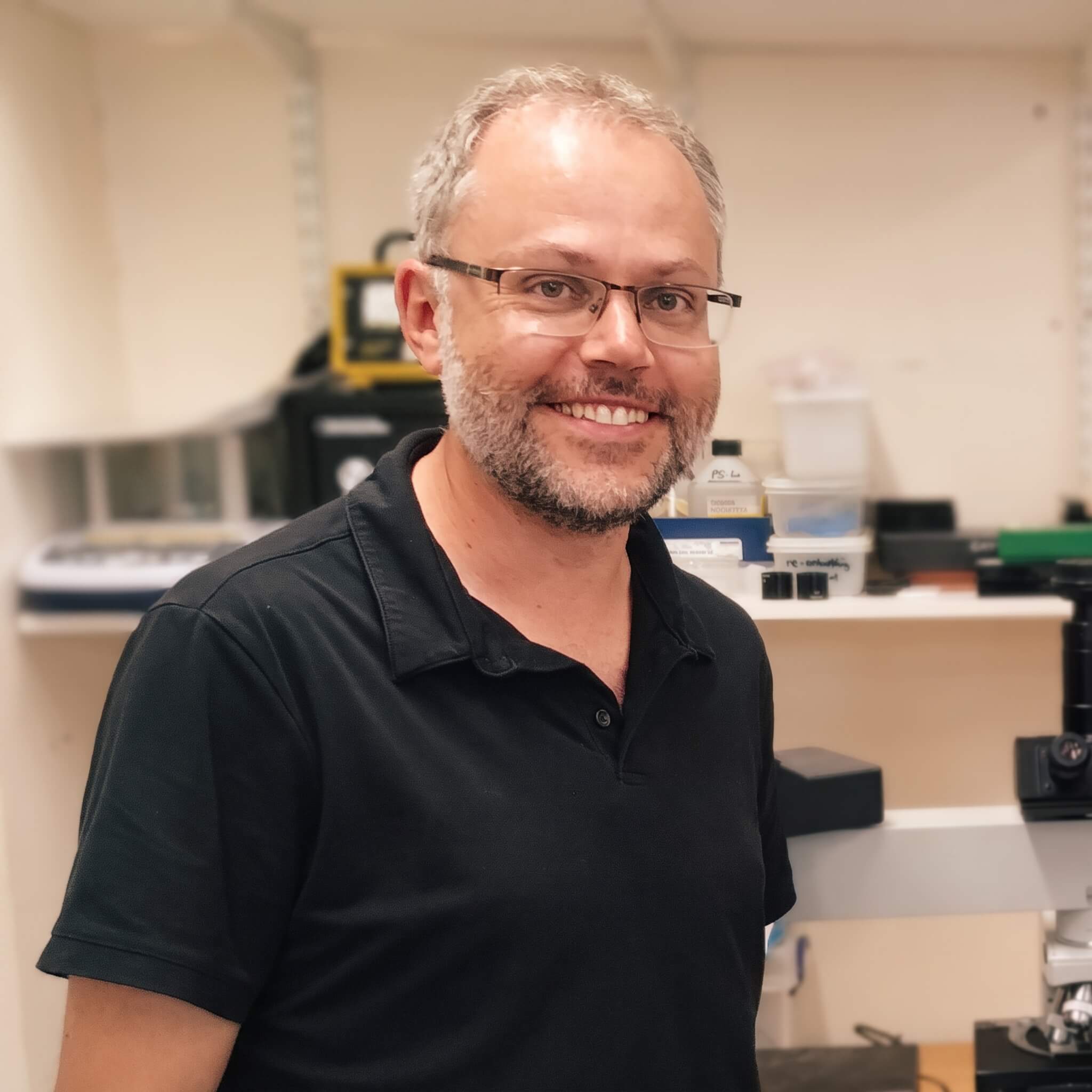
For Dr. Tim Viney, Associate Professor of Neuroscience and head of the Neural Circuit Vulnerability Group at the University of Oxford, understanding the brain is an ongoing journey of profound curiosity. Nestled in the historic Department of Pharmacology, Tim’s lab is pushing the boundaries of systems neuroscience to answer one of the most pressing questions in modern medicine: How do early pathological changes in specific brain circuits lead to the devastating cognitive symptoms of dementia and other neurodegenerative disorders?
By combining advanced in vivo electrophysiology, neuroanatomy, and virtual reality, Dr. Viney’s team is decoding how the brain’s internal compass works—and why it is often the first system to fail as neurodegenerative diseases take hold.
A Lifelong Pursuit of Discovery
Dr. Viney’s passion for scientific research wasn’t born overnight; rather, it was sparked during a year-long undergraduate placement at the University of Iowa.
“I just was fascinated by basic research,” Tim recalls. “The process of discovery captivated me. I decided during my placement that I wanted to pursue a PhD.” This drive led him to apply to the International PhD Programme at the prestigious Friedrich Miescher Institute (FMI) in Basel, Switzerland, where he crossed paths with Dr. Botond Roska, an expert on the retina and new FMI group leader. In 2010, Tim moved to the MRC Anatomical Neuropharmacology Unit in Oxford to work with renowned neuroscientist Peter Somogyi, ultimately establishing his own independent research group.
Today, Tim’s lab at Oxford focuses on selective neural circuit vulnerability. While most Alzheimer’s disease research traditionally targets the cerebral cortex, Tim’s group looks deeper—focusing heavily on the head direction system situated in the thalamus (specifically the anterodorsal thalamic nucleus). This region acts as a hub for head direction cells, a critical component for navigating the world.
Some of his findings were recently published in Current Biology under the title “Diversity and sensorimotor specialization of head direction cells in the mouse thalamus”.
The Challenge: Capturing the Elusive Single Neuron
To truly understand how processes such as spatial navigation are coordinated in the brain, Tim’s lab employs a signature, highly demanding technique: single-neuron juxtacellular recording and labelling with glass electrodes.
However, doing this in freely moving animals is notoriously difficult.
“The success rate to even just record a cell, let alone label it, can be very low,” Tim explains. “It can take ten attempts or more just to find the right cell, and then you have to keep that cell stable while the animal navigates.”
To bypass these mechanical instabilities while keeping the animal actively engaged in spatial navigation behaviours, the lab transitioned to head-fixed preparations. But to study navigation in a head-fixed mouse, you need an immersive, believable environment. You need virtual reality.
Enter the PhenoSys JetBall: "A System that Just Works"
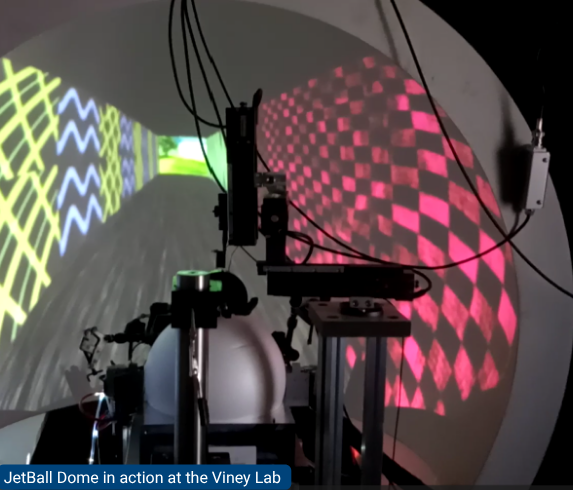
While looking for solutions, Tim first heard about the PhenoSys JetBall from the laboratory of Thomas Klausberger in Vienna—one of PhenoSys’ very first customers. Seeing that the system could reliably support head-fixed spatial tasks, Tim’s lab acquired a JetBall Dome VR system.
The immersive, spherical screen of the Dome gave the mice a highly realistic, 360-degree sense of movement. However, the physical enclosure of the dome initially made it tricky to position their delicate glass recording electrodes under microscopic guidance. This was rectified with a simple rail system to slide the dome back and forth.
For Tim, one of the biggest selling points of the JetBall was its sheer reliability. In a field where researchers often spend more time troubleshooting systems and customising rigs than collecting data, the JetBall was a breath of fresh air.

It’s a system that just works, letting us focus on the science rather than extensive troubleshooting and maintenance. And if we ever did have any minor issues, we could contact Karsten, and it would be resolved in an hour or two. The customer support is truly exceptional.
Breakthroughs on the Spherical Treadmill
With the JetBall fully integrated into their daily workflow, Tim’s lab has produced a steady stream of publications, contributing to several major milestones.
An early milestone with the JetBall came in 2017 through collaborative work between the Somogyi and Dupret labs, published in Neuron, which directly demonstrated a tight link between rhythmic subcortical activity and hippocampal memory networks. Building on these insights, Tim’s lab pushed the technology even further to tackle a major challenge in neurodegeneration research: recording spatially-responsive neurons in the aging brain.
In their 2022 Cell Reports paper, the team achieved a remarkable feat: they successfully recorded neural activity in very old mice (23–24 months old) navigating the JetBall VR system.
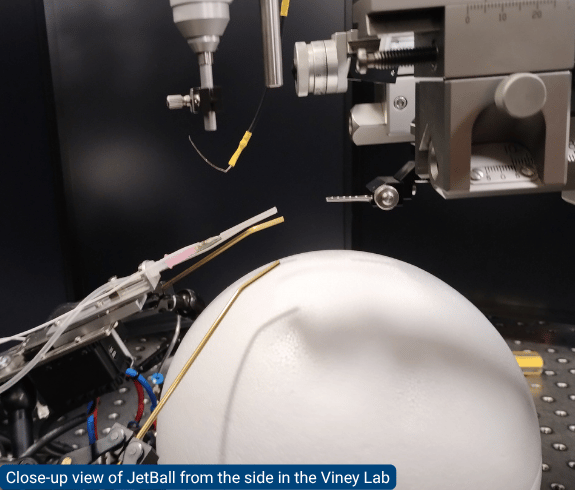
These mice were approaching the end of their natural lives, and some were carrying a high burden of tau pathology, one of the hallmarks of Alzheimer’s disease,” Tim says. “They were frail, but because they could be head-restrained and gently supported on the JetBall, they were healthy and comfortable enough to successfully run and navigate. It proved that aged, pathological models can still be beautifully studied in virtual environments.”
Wisdom for the Next Generation
Having mentored numerous successful students and postdocs, Tim has simple but profound advice for young neuroscientists entering the world of virtual reality behaviour.
“Don’t design something too complicated when you start. Start as simple as possible.” Ultimately, Tim believes the magic of neuroscience lies in open-minded observation.
Be curious and keep asking why,” he says with a smile. “Just keep recording. If you look closely enough, the brain’s secrets have a wonderful way of revealing themselves.”